
Ceramic art
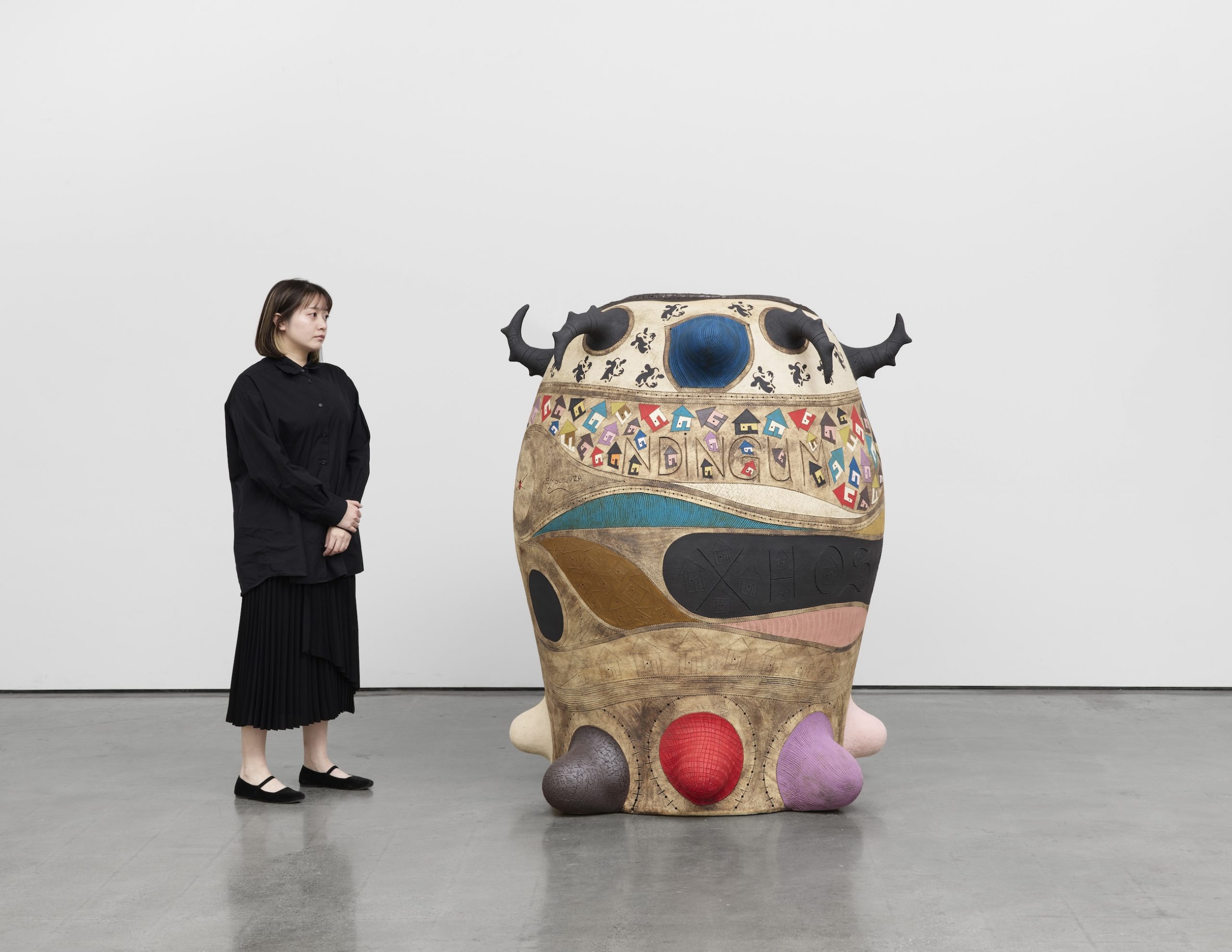
Ceramic art is art made from ceramic materials (including clay). It is one of the plastic arts. Pottery, tiles, figurines, sculptures and tableware are all examples of ceramic art. Some ceramic products are considered fine art, others decorative, industrial, or applied art objects. Ceramics might also be considered artifacts in archeology. Pottery / ceramic factories . People make, decorate and manufacture pottery / ceramic . Some pottery is called art pottery. Studio pottery is pottery made by one-person pottery studios, ceramists or potters. Ceramics exclude glass and mosaics made of glass tesserae. Ceramic art has a long history in almost all developed cultures, and often the only surviving evidence of artistic activity from vanished cultures such as that of the Nok in Africa over 2,000 years ago, are ceramic objects. Cultures especially noted for ceramics are the Chinese, Cretan, Greek, Persian, Mayan, Japanese, Korean, and modern Western cultures. Various aspects of ceramic art have been emphasized at different times: the shape of the object, its decoration, by means of painting, carving and other methods, and the glazing which is present on most ceramics. The modern art of ceramics in Britain and the United States was inspired by the Arts and Crafts movement of the early twentieth century, which revived pottery as a specifically modern art.The crafts stressed traditional, non-industrial modes of production, fidelity to the material, the skills of the individual maker, attention to utility and a lack of the excessive ornamentation typical of the Victorian era. The term "ceramics" comes from the Greek word keramikos (κεραμεικός), meaning "pottery", which itself derives from the word keramos (κέραμoς), meaning "potter's clay". Most of the traditional ceramic products were made of clay (or clay mixed with other materials), formed and exposed to heat . Tableware and decorative ceramics are still generally made this way . In modern ceramic engineering usage it is the art and science of making objects from inorganic, non-metallic materials by the action of heat. It does not contain glass and glass tessera mosaic.

Etruscan: Diomedes and Polyxena, from the Etruscan amphora of the Pontic group, c. 540–530 BCE – From Vulci
Ceramic art has a long history in almost all developed cultures, and often the only surviving evidence of artistic activity from vanished cultures such as that of the Nok in Africa over 2,000 years ago, are ceramic objects. Cultures especially noted for ceramics are the Chinese, Cretan, Greek, Persian, Mayan, Japanese, Korean, and modern Western cultures. Various aspects of ceramic art have been emphasized at different times: the shape of the object, its decoration, by means of painting, carving and other methods, and the glazing which is present on most ceramics. Ceramic art has a long history in almost all developed cultures, and often the only surviving evidence of artistic activity from vanished cultures such as that of the Nok in Africa over 2,000 years ago, are ceramic objects. Cultures especially noted for ceramics are the Chinese, Cretan, Greek, Persian, Mayan, Japanese, Korean, and modern Western cultures. Various aspects of ceramic art have been emphasized at different times: the shape of the object, its decoration by means of painting, carving and other methods, and the glazing which is present on most ceramics.

The Music Lesson, gold anchor, Chelsea porcelain, c. 1765, with bocage background. 15 3/8 × 12 1/4 × 8 3/4 inches, 22 lb. (39.1 × 31.1 × 22.2 cm, 10 kg). different version, different angle.
_(12049460964).jpg)
Earthenware is pottery that is not fired to the point of vitrification, and so it is permeable to water. It has been used since earliest times to make many kinds of pottery. It was the commonest kind of pottery outside the far East until the 18th century. Clay, quartz and feldspar are often found in earthenware.Terracotta is a type of earthenware. It is a ceramic made from clay and either unglazed or glazed, with a porous fired body. It is used to make utilitarian vessels, flower pots, water and waste water pipes, bricks and surface embellishments in building construction. Terracotta (see below) has often been used for ceramic art. Clay, quartz and feldspar are often found in earthenware.Terracotta is a type of earthenware. It is a ceramic made from clay and either unglazed or glazed, with a porous fired body. It is used to make utilitarian vessels, flower pots, water and waste water pipes, bricks and surface embellishments in building construction. Terracotta (see below) has often been used for ceramic art.

Chinese Jun ware wheel-thrown stoneware bowl with blue glaze and purple splashes, Jin dynasty, 1127–1234
Stoneware is a vitreous or semi-vitreous ceramic body made up mostly of stoneware clay or non-refractory fire clay. Stoneware is fired to high temperatures . It is non-porous whether vitrified or not, glazed or not. One commonly accepted definition is that of the Combined Nomenclature of the European Communities, a European industry standard that describes it as “Stoneware, which, although dense, impermeable and hard enough to resist scratching by a steel point, differs from porcelain in that it is more opaque and is normally only partially vitrified. It can be vitreous or semi vitreous. It is typically colored gray or brownish by impurities present in the clay from which it is made and is usually glazed. Stoneware is a vitreous or semi-vitreous ceramic body made up mostly of stoneware clay or non-refractory fire clay. Stoneware is fired to high temperatures . It is non-porous whether vitrified or not, glazed or not. One commonly accepted definition is that of the Combined Nomenclature of the European Communities, a European industry standard that describes it as “Stoneware, which, although dense, impermeable and hard enough to resist scratching by a steel point, differs from porcelain in that it is more opaque and is normally only partially vitrified. It can be vitreous or semi vitreous. It is typically colored gray or brownish by impurities present in the clay from which it is made and is usually glazed.

16th century Turkish Iznik tiles, which would have originally formed part of a much larger group
Porcelain is a ceramic material made by heating materials, generally including kaolin , in a kiln to temperatures between 1,200 and 1,400 °C (2,200 and 2,600 °F). The vitrification process and the development of the mineral mullite within the body at these high temperatures is mainly responsible for the toughness, strength and translucence of porcelain, when compared with other types of pottery. Porcelain is defined by low permeability and elasticity; by strength, hardness, toughness, whiteness, translucency and resonance; and by high resistance to chemical attack and thermal shock. Porcelain is said to be "perfectly vitrified, hard, impervious (even before glazing), white or artificially colored, translucent (except when of considerable thickness), and resonant". However, there is no universal definition of the term porcelain, and it has “been applied in a very unsystematic.
The ornamentation of glazed porcelain items, such as plates, bowls, vases, or statues, is known as China painting or porcelain painting. The object's body could be made of soft-paste porcelain (often bone china), which originated in Europe in the eighteenth century, or hard-paste porcelain, which originated in China in the seventh or eighth century. Painted ornamentation on tin-glazed pottery like maiolica or faience or lead-glazed earthenware like creamware is included under the more general term "ceramic painting." To create a firm, porous biscuit, the body is usually first burned in a kiln. Ceramic glaze, which is heated to adhere to the body, may then be applied after underglaze decoration. After that, the glazed porcelain could be painted with overglaze and fired once again at a lower temperature to create a bond.The ornamentation of glazed porcelain items, such as plates, bowls, vases, or statues, is known as China painting or porcelain painting. The object's body could be made of soft-paste porcelain (often bone china), which originated in Europe in the eighteenth century, or hard-paste porcelain, which originated in China in the seventh or eighth century. Painted ornamentation on tin-glazed pottery like maiolica or faience or lead-glazed earthenware like creamware is included under the more general term "ceramic painting." To create a firm, porous biscuit, the body is usually first burned in a kiln. Ceramic glaze, which is heated to adhere to the body, may then be applied after underglaze decoration. After that, the glazed porcelain could be painted with overglaze and fired once again at a lower temperature to create a bond.

Painted Capodimonte porcelain jar by (or in the style of) Giovanni Caselli with three figures of Pulcinella from the commedia dell'arte, 1745–1750. 16.2 cm high
In modern ceramic art, "terra sigillata" refers only to a watery refined slip that is used to promote carbon smoke effects and facilitate the burnishing of raw clay surfaces in both primitive low temperature firing techniques and unglazed alternative western-style Raku firing techniques. This is in stark contrast to the archeological usage of the term, which refers to an entire class of pottery. In higher temperature glazed ceramic processes, terra sigillata is often utilized as a brushable ornamental colorant media. In modern ceramic art, "terra sigillata" refers only to a watery refined slip that is used to promote carbon smoke effects and facilitate the burnishing of raw clay surfaces in both primitive low temperature firing techniques and unglazed alternative western-style Raku firing techniques. This is in stark contrast to the archeological usage of the term, which refers to an entire class of pottery. In higher temperature glazed ceramic processes, terra sigillata is often utilized as a brushable ornamental colorant media.
Various aspects of ceramic art have been emphasized at different times: the shape of the object, its decoration, by means of painting, carving and other methods, and the glazing which is present on most ceramics. Ceramic art has a long history in almost all developed cultures, and often the only surviving evidence of artistic activity from vanished cultures such as that of the Nok in Africa over 2,000 years ago, are ceramic objects. Cultures especially noted for ceramics are the Chinese, Cretan, Greek, Persian, Mayan, Japanese, Korean, and modern Western cultures. Various aspects of ceramic art have been emphasized at different times: the shape of the object, its decoration by means of painting, carving and other methods, and the glazing which is present on most ceramics.

Ancient Roman pottery, mould-decorated terra sigillata bowl from Gaul (Metz in France)
Ceramicists may burnish their products to complete ceramics, which are frequently earthenware. In this method, a firm, smooth object—typically a stone—is rubbed over the surface of a clay sculpture. Clay particles are aligned and a smooth surface is produced by burnishing. The ability of the vessel to hold food or water may be enhanced by this particle alignment. Even more polished surfaces that are ideal for additional ornamentation can be achieved by applying oil between strokes throughout many burnishing passes.
Join our classes to enhance & improve your memory skills and let your child unlock the power to retain information from every moment of his/her life!
