
Craft
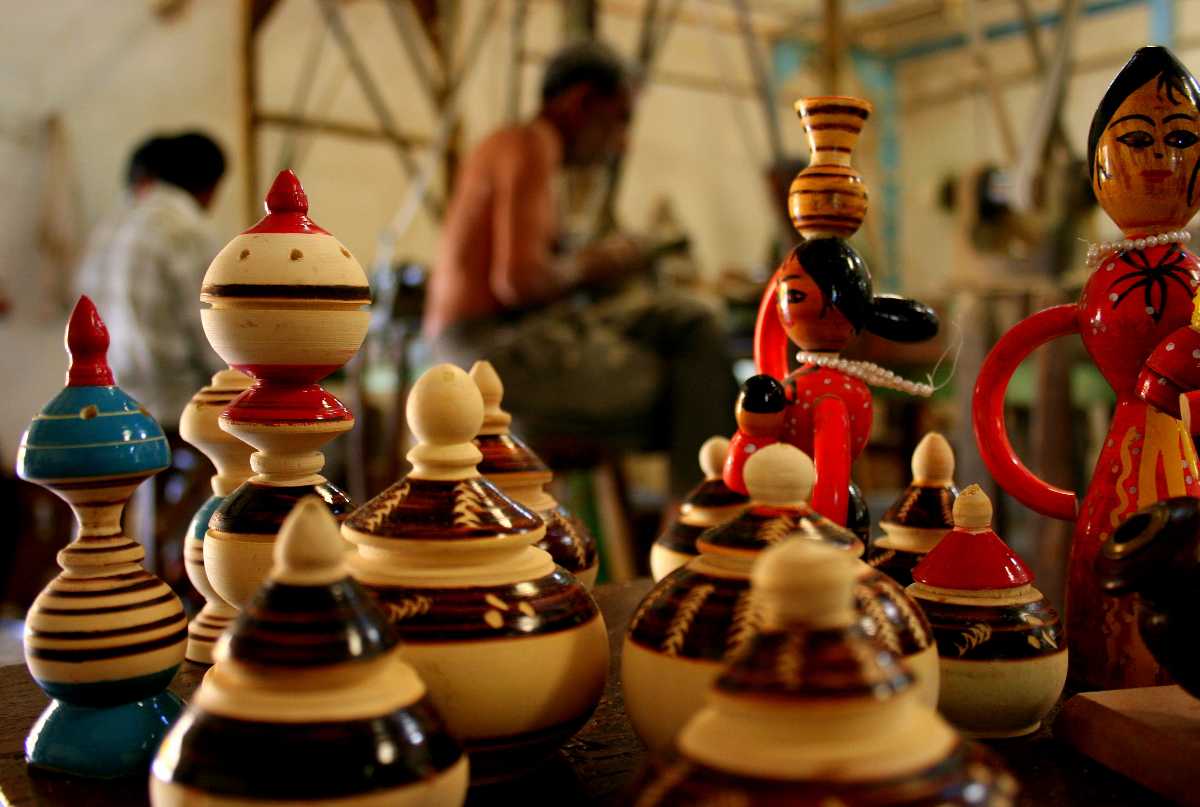
Craft or trade is a pastime or an occupation requiring special skill and knowledge of skilled work. Historically, especially in the Middle Ages and prior, the term is most often used when referring to people who are involved in small scale production of goods, or their maintenance, such as tinkers. Today the traditional term craftsman is often replaced with artisan and with craftsperson. In the past, the more specialized crafts, producing high-value products, tended to be concentrated in urban centers, and their practitioners formed craft guilds. Their skills had to undergo an apprenticeship. The artisans were more respected than the unskilled poor of the cities. Their work demanded a skill and a permanent engagement in the exchange of goods that often necessitated a higher level of education. Craftspeople were generally in a more privileged position than the peasantry within the social hierarchy. Artisan households were not as self-sufficient as those of people engaged in agricultural work and thus had to depend on the exchange of goods. Some crafts, especially pottery, woodworking and the various stages of textile production, could be part-time activities for those who also worked in agriculture, and were often part of village life.

Craft fair in Sonargaon, Bangladesh
In some countries this stepwise process of mastering a craft, in which a certain level of education and skill was achieved, continued to this day. But crafts have seen profound structural changes since and during the period of the Industrial Revolution. The mass production of commodities by large-scale industry has confined crafts to market niches where the ways of functioning of industry or of its mass-produced commodities are incompatible with the preferences of potential buyers. Their skills had to undergo an apprenticeship. In the past, the more specialized crafts, producing high-value products, tended to be concentrated in urban centers, and their practitioners formed craft guilds. Their skills had to undergo an apprenticeship. The artisans were more respected than the unskilled poor of the cities. Their work demanded a skill and a permanent engagement in the exchange of goods that often necessitated a higher level of education.

Japanese potter at his wheel (1914)
Craftspeople were generally in a more privileged position than the peasantry within the social hierarchy. Artisan households were not as self-sufficient as those of people engaged in agricultural work and thus had to depend on the exchange of goods. Some crafts, especially pottery, wood working and the various stages of textile production, could be part-time activities for those who also worked in agriculture, and were often part of village life. The artisans were more respected than the unskilled poor of the cities. Their work demanded a skill and a permanent engagement in the exchange of goods that often necessitated a higher level of education. Craftspeople were generally in a more privileged position than the peasantry within the social hierarchy. Artisan households were not as self-sufficient as those of people engaged in agricultural work and thus had to depend on the exchange of goods. Some crafts, especially pottery, woodworking and the various stages of textile production, could be part-time activities for those who also worked in agriculture, and were often part of village life. These developments mean that craftspeople today often work with semi-finished components or materials and customize these to the needs or wishes of their customers. They thus share in a certain division of labor between industry and craft.
Nature of craft skill
The nature of craft skill and the process of its development is still debated by philosophers, anthropologists, and cognitive scientists. A number of scholars note that craft skill involves particular modes of experiencing tools and materials, such as allowing tools to recede from focal awareness, perceiving tools and materials in terms of their practical interrelationships, or perceiving aspects of work that are invisible to the untrained eye. Observational learning and mimicry are highlighted by other craft skill researchers, who examine how learners visually dismantle the movements of experts. Others totally underplay the role of the individual craftsman, stressing instead the collective nature of craft knowledge or the role of the materials as co-creators in the production process. In the past, the more specialized crafts, producing high-value products, tended to be concentrated in urban centers, and their practitioners formed craft guilds. Their skills had to undergo an apprenticeship. The artisans were more respected than the unskilled poor of the cities. Their work demanded a skill and a permanent engagement in the exchange of goods that often necessitated a higher level of education. Craftspeople were generally in a more privileged position than the peasantry within the social hierarchy. Artisan households were not as self-sufficient as those of people engaged in agricultural work and thus had to depend on the exchange of goods. Some crafts, especially pottery, woodworking, and the various stages of textile production, could be part-time activities for those who also worked in agriculture, and were often part of village life. A number of scholars note that craft skill involves particular modes of experiencing tools and materials, such as allowing tools to recede from focal awareness, perceiving tools and materials in terms of their practical interrelationships, or perceiving aspects of work that are invisible to the untrained eye. Observational learning and mimicry are highlighted by other craft skill researchers, who examine how learners visually dismantle the movements of experts. Others totally underplay the role of the individual craftsman, stressing instead the collective nature of craft knowledge or the role of the materials as co-creators in the production process.

Bagh print traditional hand block print craft in India
Handicraft
Handicrafts are the “traditional” main part of the crafts. It is a kind of work in which ornamental and useful devices are made entirely by hand or only with the use of simple tools. The term is usually applied to the traditional ways of producing goods. A key criterion is the individual craftsmanship of the objects, which often have cultural and/or religious significance. Handicraft products are not mass-produced or machine-made articles.
In places like the Ottoman Empire, the start of crafts meant that governing bodies made members of the city who were good at making things open up shops in the center of the city. A key criterion is the individual craftsmanship of the objects, which often have cultural and/or religious significance. Handicraft products are not mass-produced or machine-made articles. In places like the Ottoman Empire, the start of crafts meant that governing bodies made members of the city who were good at making things open up shops in the center of the city. Apart from conventional goods, handicraft has a place to play in the computing domain by linking craft practices with technology. For example, the core memory in the Apollo 8 spacecraft in 1968 was made of wires that had been hand-woven around and through electromagnetic cores. The core rope memory they created held the information needed to successfully complete the mission. The subject of craft and the people who make craft has become an academic one. Stephanie Bunn was an artist before she became an anthropologist and developed an academic interest while pursuing a craft. She argues that “what happens to an object before it is a ‘product’ is worthy of study.”
The Arts and Crafts Movement
Within the family of decorative arts, the term "crafts" refers to artistic practices that are typically characterized by their use of natural materials like wood, clay, ceramics, glass, textiles, and metal, or by their connection to functional or utilitarian products (like sculptural forms in the vessel tradition). The late 19th century saw the birth of the Arts and Crafts Movement in Britain, which was distinguished by a medieval-style decorating. William Morris is the main artist connected to the movement, and John Ruskin's thoughts supported his painting. In the past, the more specialized crafts, producing high-value products, tended to be concentrated in urban centers, and their practitioners formed craft guilds. Their skills had to undergo an apprenticeship. The artisans were more respected than the unskilled poor of the cities. Their work demanded a skill and a permanent engagement in the exchange of goods that often necessitated a higher level of education. Craftspeople were generally in a more privileged position than the peasantry within the social hierarchy. Artisan households were not as self-sufficient as those of people engaged in agricultural work and thus had to depend on the exchange of goods. Some crafts, especially pottery, woodworking, and the various stages of textile production, could be part-time activities for those who also worked in agriculture and were often part of village life. The movement emphasized the significance of the artists' contribution to economic reform while placing a high value on craftsmanship. Others totally underplay the role of the individual craftsman, stressing instead the collective nature of craft knowledge or the role of the materials as co-creators in the production process. A number of scholars note that craft skill involves particular modes of experiencing tools and materials, such as allowing tools to recede from focal awareness, perceiving tools and materials in terms of their practical interrelationships, or perceiving aspects of work that are invisible to the untrained eye. Observational learning and mimicry are highlighted by other craft skill researchers, who examine how learners visually dismantle the movements of experts.

Stained glass window, The Hill House, Helensburgh, Scotland
Craft fairs
A craft fair is a planned occasion for showcasing and selling handmade goods. In addition to various craft fairs, there are craft shops where products are offered for sale and craft "communities" like Craftster where knowledge is exchanged and craft-related conversations take place. Their skills had to undergo an apprenticeship. The artisans were more respected than the unskilled poor of the cities. In the past, the more specialized crafts, producing high-value products, tended to be concentrated in urban centers, and their practitioners formed craft guilds. Their skills had to undergo an apprenticeship. The artisans were more respected than the unskilled poor of the cities. Their work demanded a skill and a permanent engagement in the exchange of goods that often necessitated a higher level of education. Craftspeople were generally in a more privileged position than the peasantry within the social hierarchy. Artisan households were not as self-sufficient as those of people engaged in agricultural work and thus had to depend on the exchange of goods. Some crafts, especially pottery, woodworking, and the various stages of textile production, could be part-time activities for those who also worked in agriculture and were often part of village life.

Craft fair in Bampton, UK
Their work demanded a skill and a permanent engagement in the exchange of goods that often necessitated a higher level of education. Craftspeople were generally in a more privileged position than the peasantry within the social hierarchy. Artisan households were not as self-sufficient as those of people engaged in agricultural work and thus had to depend on the exchange of goods. Some crafts, especially pottery, woodworking, and the various stages of textile production, could be part-time activities for those who also worked in agriculture and were often part of village life. A competent manual worker with a high level of theoretical and practical expertise in a particular profession or craft is known as a tradesperson. There may be a scarcity of experienced manual laborers in societies where professional vocations are highly valued, creating profitable niche markets in the trades.
Join our classes to enhance & improve your memory skills and let your child unlock the power to retain information from every moment of his/her life!
