
Impasto
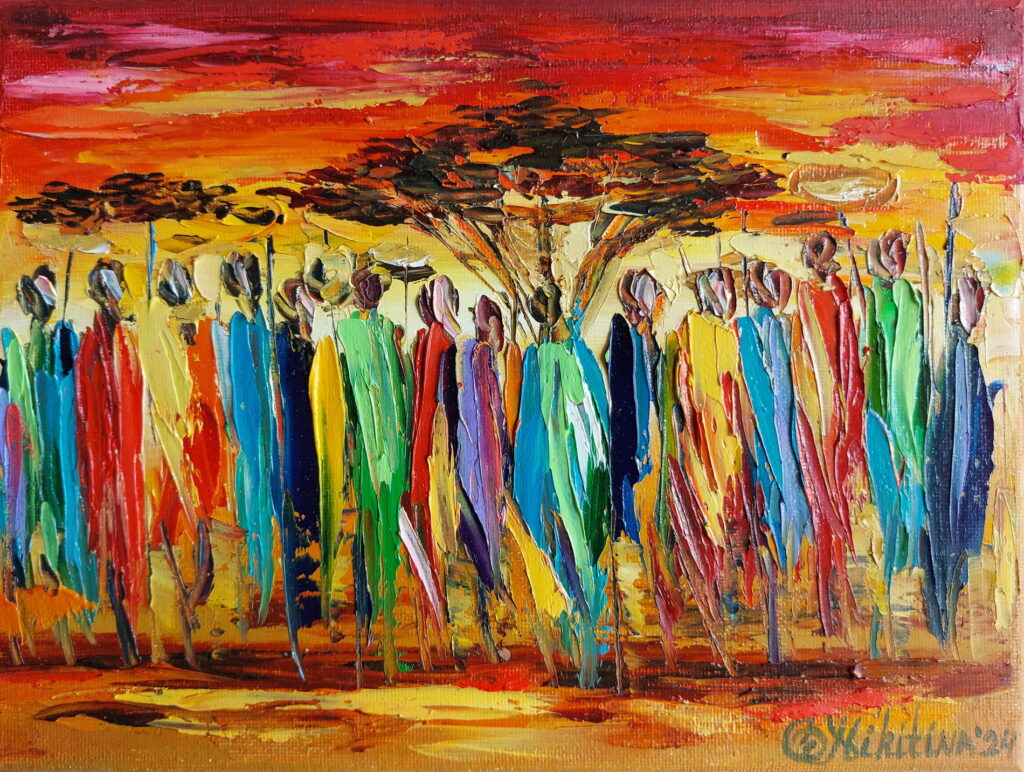
Impasto is a painting method in which a thick layer of paint is applied to a portion of the surface, typically thick enough to show the brush or painting-knife strokes. It is also possible to mix paint directly on the canvas. Impasto adds texture when it dries, giving the impression that the paint is peeling off the canvas. Impasto is an Italian word that means "dough" or "mixture" and is linked to the verb impastare, which means "to knead" or "to paste." Impasto is used both as a painting and a potting method in Italy. Pasta is the basic word of impasto, which means "paste". Because of its thick consistency and slow drying period, oil paint is the conventional material for impasto painting. By using strong body acrylic gels, acrylic paint can also be utilized for impasto. Because watercolor and tempera are inherently thin, impasto is typically not employed in these mediums without the addition of a thickening agent. When using pastels, an artist can create a limited impasto effect by forcefully pressing a soft pastel against the paper.

There are multiple uses for the impasto technique. It first gives the artist more control over the play of light in the painting by causing the light to reflect in a specific way. Second, it can enhance the painting's expressiveness by allowing the observer to see how quickly and forcefully the artist applied the paint. Third, a painting can be transformed into a three-dimensional sculpture by using impasto. Master painters like Rembrandt, Titian, and Vermeer first aimed to depict wrinkles in clothing or jewels; this goal was later contrasted with a more delicate painting approach. The French Impressionists produced works with beautiful impasto textures that covered whole canvases much later. Vincent van Gogh commonly employed it for artistic expression and aesthetics.
Artists
Vincent van Gogh
Vincent van Gogh, a Dutch Post-Impressionist painter, created The Starry Night, an oil painting. It was painted in June 1889 and features a fictitious settlement in addition to the scene from the east-facing window of his asylum chamber at Saint-Rémy-de-Provence, shortly before sunrise. Since its acquisition through the Lillie P. Bliss Bequest in 1941, it has been a part of the permanent collection of the Museum of Modern Art in New York City . The Starry Night has been called a "touchstone of modern art" and is considered one of the most well-known paintings in the Western canon.
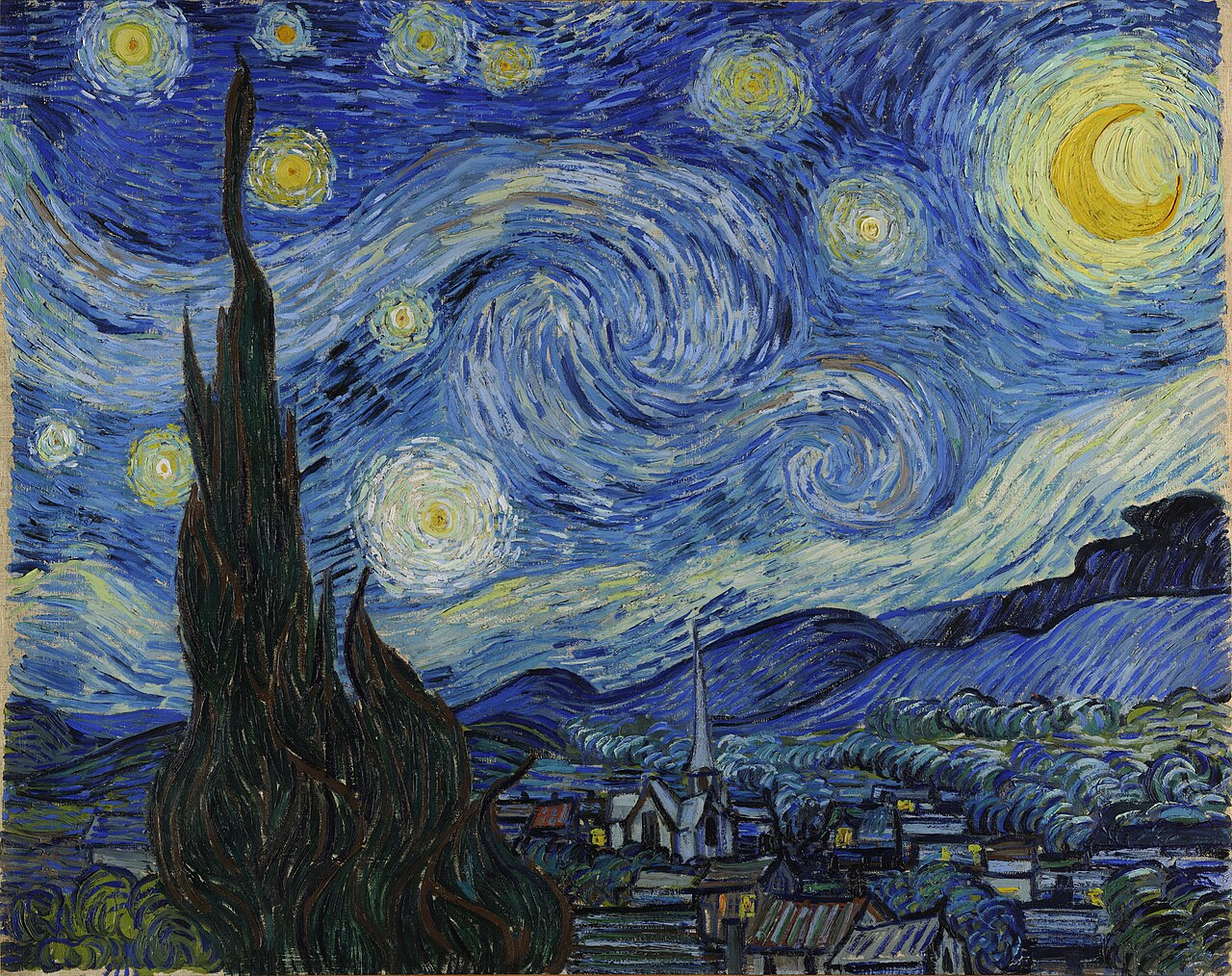
Starry Night by Van Gogh 1889
Inspired by the scene from Van Gogh's bedroom window at the Saint-Paul-de-Mausole institution, the painting was produced in mid-June 1889. Van Gogh deliberately checked himself into the former monastery, which served as a psychiatric institute, on May 8, 1889, after having a mental breakdown and committing his notorious act of self-mutilation in late December 1888. At the time of Van Gogh's admission, the facility, which catered to affluent patients, was less than half full, giving the artist access to both a ground-floor studio and a bedroom on the second level. Irises, a self-portrait, and The Starry Night were among the many works he produced during his year-long stay. Venus, which was visible in the sky at the time, is one of the celestial elements depicted in the picture; however, the representation of the moon is not realistic from an astronomical perspective. In comparison to other pieces, the size of the cypress trees in the foreground was enhanced. According to Van Gogh's correspondence, they were more aesthetically pleasing than symbolic. Instead of depicting the actual countryside as viewed from the asylum, the settlement in the painting is a fictional embellishment based on sketches.
The Starry Night has been interpreted in a variety of ways, from depictions of Van Gogh's mental struggle to religious implications. While some art historians interpret the whirling sky as a reflection of Van Gogh's inner troubles, others connect it to recent astronomical findings. Even Van Gogh was critical of the work, calling it a "failure" in correspondence with his brother Theo. When Vincent passed away, Theo inherited the artwork. The piece belonged to Theo's wife, Jo, who sold it to Émile Schuffenecker in 1901 after Theo passed away six months after Vincent did. Schuffenecker then sold it back to Jo in 1905. Georgette P. van Stolk, a Rotterdam resident, owned it from 1906 until 1938.
Van Gogh painted the scene under a variety of weather conditions and at different times of day, including dawn, moonrise, sunny days, cloudy days, windy days, and one day with rain. Van Gogh was allowed to sketch in his bedroom using charcoal or ink, even though the medical personnel forbade him from painting there. Eventually, he would base more recent versions on earlier ones. The diagonal line that enters from the right and depicts the low rolling hills of the Alpilles mountains is the visual feature that unites all of these works. In fifteen of the twenty-one versions, cypress trees are visible beyond the far wall enclosing the wheat field. Cypresses and the Starry Night in F717 Wheat Field.Additionally, F611 Mountainous Landscape Behind Saint-Rémy, which is currently located in Copenhagen, is among the earliest paintings depicting the scene. Van Gogh drew the work multiple times, with F1547 being one of them. The Enclosed Wheatfield Following a Storm is a common example. It's uncertain if the painting was created outside or in his studio. He notes that he had been working outside for a few days in his letter dated June 9th. In a letter to his sister Wil dated June 16, 1889, Van Gogh detailed the second of the two landscapes he mentioned he was working on. This is F719 Green Wheat Field with Cypress, which he painted outdoors in the asylum and is currently located in Prague.

Out of all the vistas from his bedroom window, only the Starry Night is a nocturne. "This morning I saw the countryside from my window a long time before sunrise with nothing but the morning star, which looked very big," Vincent wrote to Theo in the beginning of June. It has been established by researchers that Venus, sometimes known as the "morning star," was visible at dawn in Provence in the spring of 1889 and was almost as bright as possible at that time. Venus is therefore the brightest "star" in the artwork, located directly to the viewer's right of the cypress tree.
Cordelia Wilson
The birthplace of Cordelia "Cordie" Creigh is Colorado's Clear Creek County. Thomas Creigh and Emma (Webb) Creigh had only one child, her. She grew up in Winfield, Kansas, and Colorado with her mother and her step-siblings after her parents separated when she was four years old. In 1897, she wed Willard J. Wilkinson in Boulder, Colorado, and the following year, in Hayden, she gave birth to her only child, Louise. Nevertheless, the couple separated for a while until becoming divorced in 1910. In 1911, Cordelia married John Henry Wilson in Victoria, British Columbia, and soon after, they moved back to Colorado.
Then, inspired by Robert Henri's latest American realism ideas, Cordelia started to seriously hone her artistic abilities. Her academic background focused on developing an alla prima technique and painting outdoors, which motivated her to swiftly create daring impasto pieces. She began traveling by car to New Mexico, where she made acquaintances with artists from the Santa Fe art community and the Taos Society of Artists. Art dealers were drawn to her many expressive oil sketches and outdoor canvases of harsh landscapes and adobe homes. In Denver, Colorado, she, her husband, and their daughter made their home on Tremont Street, which is close to the J.

Taos Mountain, Trail Home, by Cordelia Wilson.
Two of Cordelia Wilson's paintings were chosen for the inaugural exhibition of the brand-new New Mexico Museum of Art in Santa Fe in 1917. In addition to the "Taos Six" (Oscar E. Berninghaus, Ernest Blumenschein, Irving Couse, Herbert Dunton, Bert Geer Phillips, and Joseph Henry Sharp) and other Taos Society members, the exhibition included easel pieces by George Bellows, Robert Henri, F. Martin Hennings, and Leon Kroll who were active in the Southwest at the time. The January–February 1918 issue of the journal Art and Archaeology (published by the Archaeological Institute of America) included a reproduction of one of her paintings from the exhibition, A Mexican Home, along with a cover story about the museum's opening.
Rembrandt
In contrast to the majority of 17th-century Dutch painters, Rembrandt's paintings feature a broad variety of topics and genres, including landscapes, genre scenes, allegorical and historical scenes, biblical and mythical subjects, animal studies, and portraits and self-portraits. During what historians refer to as the Dutch Golden Age, he made significant artistic achievements. Although Rembrandt never traveled outside, Dutch and Flemish artists who had studied in Italy as well as the art of the Italian Old Masters had a significant influence on him. Rembrandt's final years were characterized by personal tragedy and financial difficulties following his early success as a portrait painter. Nonetheless, his paintings and etchings were well-liked throughout his life, he maintained a solid reputation as an artist, and he taught numerous significant Dutch for twenty years. Although Rembrandt never traveled outside, Dutch and Flemish artists who had studied in Italy as well as the art of the Italian Old Masters had a significant influence on him. Rembrandt's final years were characterized by personal tragedy and financial difficulties following his early success as a portrait painter. Nonetheless, his paintings and etchings were well-liked throughout his life, he maintained a solid reputation as an artist, and he taught numerous significant Dutch for twenty years.
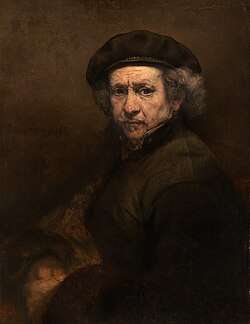
Self-Portrait with Beret and Turned-Up Collar (1659)
On July 15, 1606, Rembrandt Harmenszoon van Rijn was born in Leiden, which is now part of the Netherlands. He was the ninth child born to Neeltgen Willemsdochter van Zuijtbrouck and Harmen Gerritszoon van Rijn. His mother was the daughter of a baker, and his father was a miller, therefore his family was fairly well. His father was a member of the Dutch Reformed Church, while his mother was a Catholic. A major motif in Rembrandt's artwork is religion, and his faith is interesting given the religiously contentious era he lived in. He attended a Latin school when he was younger. Despite having a stronger preference for painting, he studied at the University of Leiden in 1620 and was shortly apprenticed to Jacob van Swanenburg.
Join our classes to enhance & improve your memory skills and let your child unlock the power to retain information from every moment of his/her life!
