
Visual Art
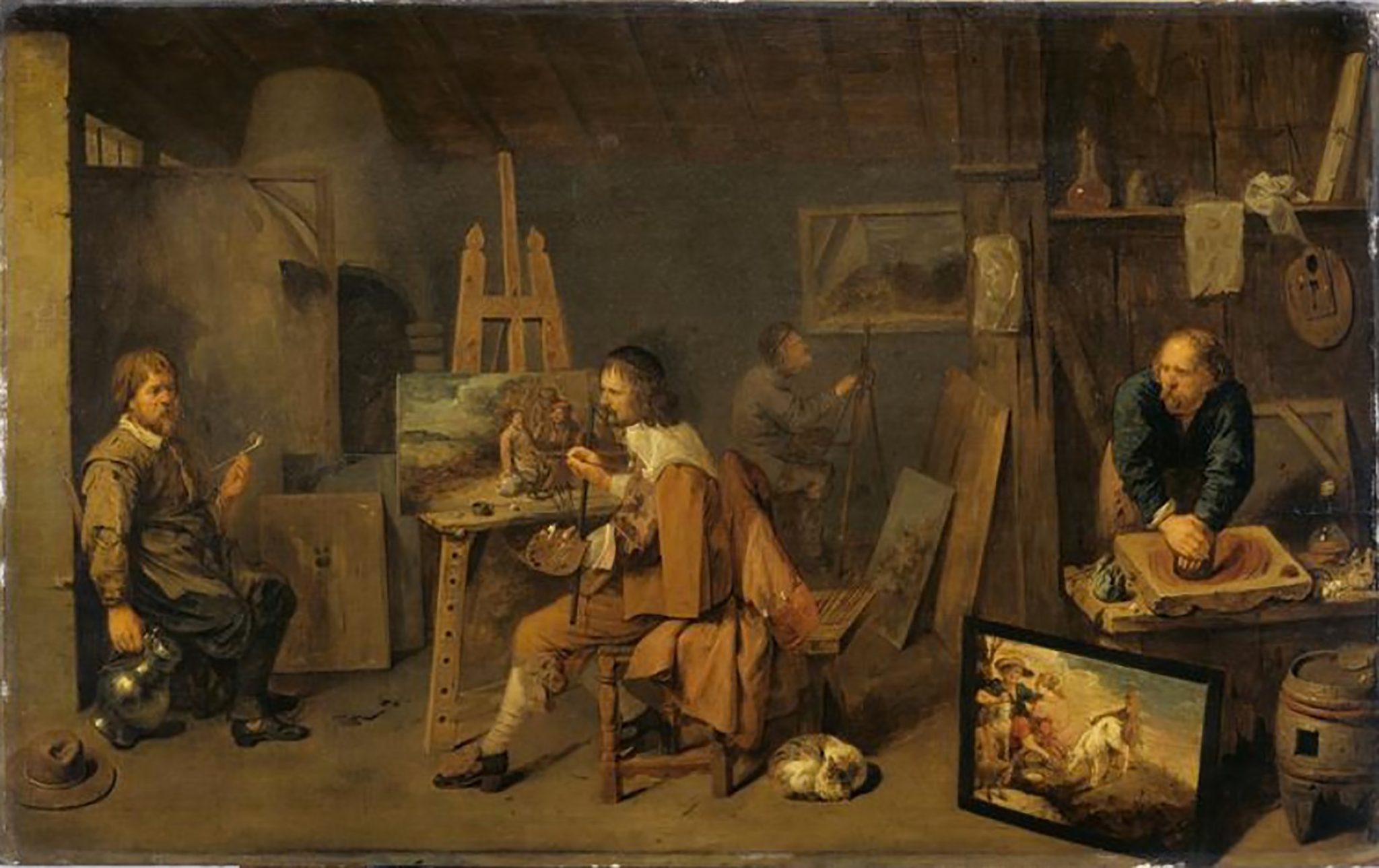
Visual arts are art forms such as painting, drawing, printmaking, sculpture, ceramics, photography, video, image, filmmaking, design, crafts and architecture Many artistic disciplines are related to visual arts and other types of arts, such as performing arts, conceptual art, textile arts. It also includes the applied arts as part of the visual arts, such as industrial design, graphic design, fashion design, interior design, and decorative art.Fine art is now generally regarded as one of the visual arts, along with applied or decorative arts and crafts, but this was not always so. Prior to the Arts and Crafts Movement in Britain and elsewhere at the turn of the 20th century the term 'artist' had for some centuries often been limited to a person. Visual arts are art forms such as painting, drawing, printmaking, sculpture, ceramics, photography, video, image, filmmaking, design, crafts and architecture Many artistic disciplines are related to visual arts and other types of arts, such as performing arts, conceptual art, textile arts. It also includes the applied arts as part of the visual arts, such as industrial design, graphic design, fashion design, interior design, and decorative art.Fine art is now generally regarded as one of the visual arts, along with applied or decorative arts and crafts, but this was not always so. Prior to the Arts and Crafts Movement in Britain and elsewhere at the turn of the 20th century the term 'artist' had for some centuries often been limited to a person.

The Church at Auvers, an oil painting by Vincent van Gogh (1890)
Before the Arts and Crafts Movement in Britain and elsewhere at the turn of the 20th century, the term 'artist' had for some centuries often been restricted to a person working in the fine arts (such as painting, sculpture or printmaking) and not the decorative arts, crafts or applied visual arts media. The artists of the Arts and Crafts Movement stressed the distinction and valued vernacular art forms as much as high forms. Art schools drew a distinction between the fine arts and the crafts, asserting that a craftsperson could not be considered an artist. Western art has been characterized by an increasing tendency to privilege painting, and to a lesser extent sculpture, over other arts. In the West, as well as in East Asian art, there has been a tendency to prefer painting and, to a lesser extent, sculpture, over other arts. In both regions painting has been considered as dependent on the imagination of the artist to the greatest extent and furthest from manual labor. In Chinese painting valued styles have been 'scholar-painting', at least in theory practiced by gentleman amateurs. Similar attitudes characterized the Western hierarchy of genres.

Christiaan Tonnis - Female Warrior No. 14 'Extinction', pencil and colored pencil on paper, 1981
Visual arts education and training has evolved over the years and has adopted different approaches within different global and cultural contexts. Training in the visual arts historically began as variations on the apprentice and workshop systems. Typically the training lasted for 2 to 6 years.Art education has developed differently in different parts of the world throughout history. In many countries of Europe and North America, formal art academies developed into universities and institutes. They were affected by industrialization and started to give priority to applied arts over fine arts. Conversely, art education has been de-prioritized or removed from primary curricula in several Sub-Saharan African countries in favor of vocational or STEM-based subjects. In Asian regions, curricula were often aligned with the priorities of the state or nobility. Art schools drew a distinction between the fine arts and the crafts, asserting that a craftsperson could not be considered an artist. Western art has been characterized by an increasing tendency to privilege painting, and to a lesser extent sculpture, over other arts. In the West, as well as in East Asian art, there has been a tendency to prefer painting and, to a lesser extent, sculpture, over other arts. In both regions painting has been considered as dependent on the imagination of the artist to the greatest extent and furthest from manual labor.
In many regions, political, economic and social conflicts still determine what is acceptable as art education in schools. For instance, the educational systems in several Latin American countries, which were initially limited under colonialism, have shifted focus on modern art to promote national identity. Mexican art education has a history of pedagogical tension, as the system has attempted to integrate indigenous artistic heritage with Western academic structures, often leading to a fragmented educational landscape.Museums, art galleries and other cultural institutions are the instruments of informal art education. These institutions offer historical context and esthetic exposure through curated collections and public programming which may supplement or replace standardized academic curricula. Visual arts are art forms such as painting, drawing, printmaking, sculpture, ceramics, photography, video, image, filmmaking, design, crafts and architecture Many artistic disciplines are related to visual arts and other types of arts, such as performing arts, conceptual art, textile arts.

Hokusai: Red Fuji from Thirty-six Views of Mount Fuji (1830–1832)
Drawing is the process of creating a two-dimensional image, illustration, or graphic utilizing a wide range of conventional and digital tools and techniques. Typically, it entails utilizing dry media like graphite pencils, pen and ink, inked brushes, wax color pencils, crayons, charcoal, pastels, and markers to make marks on a surface by applying pressure with a tool or moving a tool across a surface. Pens and styluses that mimic these effects are among the digital instruments that are utilized. Line drawing, hatching, random hatching, crosshatching, shading, scribbling, stippling, and blending are the primary drawing methods. The Four Treasures of the Study—brush, ink, inkstone, and paper—are highly prized by Chinese artists. Drawing has been practiced for tens of thousands of years.Before the Arts and Crafts Movement in Britain and elsewhere at the turn of the 20th century, the term 'artist' had for some centuries often been restricted to a person working in the fine arts (such as painting, sculpture or printmaking) and not the decorative arts, crafts or applied visual arts media. The artists of the Arts and Crafts Movement stressed the distinction and valued vernacular art forms as much as high forms. Art schools drew a distinction between the fine arts and the crafts, asserting that a craftsperson could not be considered an artist. Western art has been characterized by an increasing tendency to privilege painting, and to a lesser extent sculpture, over other arts. In the West, as well as in East Asian art, there has been a tendency to prefer painting and, to a lesser extent, sculpture, over other arts.
In many countries of Europe and North America, formal art academies developed into universities and institutes. They were affected by industrialization and started to give priority to applied arts over fine arts. Conversely, art education has been de-prioritized or removed from primary curricula in several Sub-Saharan African countries in favor of vocational or STEM-based subjects. In Asian regions, curricula were often aligned with the priorities of the state or nobility. Art schools drew a distinction between the fine arts and the crafts, asserting that a craftsperson could not be considered an artist. Western art has been characterized by an increasing tendency to privilege painting, and to a lesser extent sculpture, over other arts. In the West, as well as in East Asian art, there has been a tendency to prefer painting and, to a lesser extent, sculpture, over other arts. In both regions painting has been considered as dependent on the imagination of the artist to the greatest extent and furthest from manual labor.

Ancient Chinese engraving of female instrumentalists
Figurative art dating back at least 40,000 years is considered Upper Paleolithic art. Even earlier are non-figurative cave paintings made with basic geometric forms and hand stencils. Animal representations from Paleolithic caves can be discovered in places like Gabarnmung, Australia; Lascaux, France; Altamira, Spain; and Maros, Sulawesi, Asia. Ink drawings were made in ancient Egypt using potsherds and ostraca, which are fragments of limestone. During the sixth century BC, drawings on Greek vases, which were originally geometric, evolved into the human form with black-figure pottery. From the fifth and sixth centuries, there is evidence of Indian palm-leaf text sketching and image creation. Paper drawings became more common in the Middle East and Europe in the fourteenth century thanks to Islamic traders from China.
Painting is the process of transferring pigments (color) suspended in a medium or carrier together with a binding agent (glue) to a surface like paper, canvas, or walls. Drawing, composition, and other esthetic factors are combined in visual arts painting to convey the artist's intellectual and emotive meaning. It is used for many different things, from decorative and commercial arts like advertising to ceremonial body art and religious iconography. Adopted by European painters like Michelangelo, Leonardo da Vinci, and Raphael, it was viewed as an art form unto itself rather than a step before painting or sculpture. The artists of the Arts and Crafts Movement stressed the distinction and valued vernacular art forms as much as high forms. Art schools drew a distinction between the fine arts and the crafts, asserting that a craftsperson could not be considered an artist. Western art has been characterized by an increasing tendency to privilege painting, and to a lesser extent sculpture, over other arts.

Desmond Paul Henry, Picture by Drawing Machine 1, c. 1960
Painting media adjusted to new supports as societies codified ceramic and architectural traditions. Fresco and frieze techniques were established by local traditions in the Mediterranean and ancient India to adorn the plaster walls of tombs, temples, and other structures. The use of binders like tempera and encaustic increased throughout this time. Tempera applies pigments to wooden panels, ceramics, and early manuscripts using milk, egg yolk, or animal glue. In encaustic art, pigments are adhered to the support using heated wax. Using water-soluble ink on silk and paper hanging scrolls, handscrolls, or handheld fans that are structurally interwoven with poetry and meticulous calligraphy, ink wash painting emerged as a significant East Asian tradition. Simple water or fat carriers were used in these early applications for binding.
Join our classes to enhance & improve your memory skills and let your child unlock the power to retain information from every moment of his/her life!
